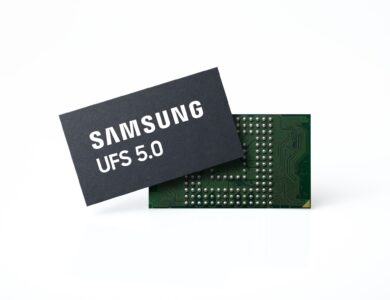
Samsung Electronics, công ty hàng đầu thế giới về chip nhớ, vừa thông báo rằng hãng đã bắt đầu sản xuất hàng loạt Chip nhớ eUFS 2.1 có dung lượng 1TB. Và đây được xem là bước đánh dấu cho biết rằng chiếc smartphone kế tiếp của Samsung, mà ở đây là Galaxy S10 sẽ có phiên bản bộ nhớ trong 1TB.
Lần đầu tiên giới thiệu giải pháp bộ nhớ UFS vào 4 năm trước khi ra mắt Galaxy S6 series, và cũng trong năm này phiên bản dung lượng cao nhất chỉ là 128GB. Nhưng hôm nay, Samsung đã tiến tới một bước ngoặc mới, tạo ra bộ nhớ lưu trữ eUFS lên đến 1TB cho thiết bị di động thông minh như smartphone, tablet, máy tính xách tay. Và với sự ra mắt của chip nhớ eUFS 1TB này thì chắc chắn Galaxy S10 sẽ có phiên bản bộ nhớ 1TB.

eUFS 1TB có kích thước 11.5mm x 13.0mm, tăng gấp đôi dung lượng của phiên bản bộ nhớ 512GB (đã từng có trên Note9) bằng cách kết hợp 16 lớp bộ nhớ flash V-NAND 512 gigabit (Gb) tiên tiến nhất của Samsung và bộ controller mới. Theo đó, với dung lượng siêu khủng này, người dùng có thể lưu đến 260 video 10 phút ở độ phân giải 4K UHD (3840 x 2160 pixel). Bên cạnh đó Samsung eUFS 1TB cũng sở hữu tốc độ đọc/ghi vượt trội, cho phép người dùng chuyển nội dung đa phương tiện dung lượng lớn với thời gian ngắn. Samsung eUFS 1TB có khả năng đọc 1000 MB/s, tốc độ xấp xỉ gấp độ ổ cứng SSD 2,5 inch thông thường, gấp 10 lần tốc độ thẻ nhớ microSD. Nếu so với phiên bản 512GB thì tốc độ của bản 1TB nhanh hơn 38%.

Samsung sẽ đẩy mạnh sản xuất eUFS 1TB này trong suốt nửa đầu năm 2019, và sẵn sàng đáp ứng nhu cầu mạnh mẽ cho các nhà sản xuất thiết bị di động toàn cầu.




real steroids for sale
References:
https://supardating.com
Sermorelin, Ipamorelin and CJC-1295 are peptide agents that stimulate the pituitary gland to release growth hormone (GH).
They differ in structure, half-life, potency and clinical applications, yet all share a
common goal: to mimic the natural pulsatile secretion of GH dianabol before and after youtube
thereby increase downstream anabolic hormones such as insulin-like growth factor-1 (IGF-1).
Growth Hormone Secretagogues: Comparing Sermorelin, CJC-1295/Ipamorelin, and Tesamorelin
Sermorelin is a synthetic analogue of the natural peptide growth hormone
releasing hormone (GHRH). It binds to GHRH receptors on somatotrophs, triggering GH release.
Its action is short-acting; a typical dose is 0.2 mg subcutaneously once daily, producing a peak in GH within 30 minutes and returning to baseline after about three
hours.
CJC-1295 is a growth hormone-releasing peptide (GHRP) that contains an amide group at the C-terminus which
confers resistance to enzymatic degradation. The original form has a half-life
of roughly one hour, but when combined with Ipamorelin—another GHRP
that specifically targets ghrelin receptors—the complex
can produce sustained GH secretion for up to 24 hours after a single dose.
This extended release is due primarily to the amide modification and
the synergy between the two peptides.
Tesamorelin is another GHRH analogue but with a longer half-life of
about six hours, allowing for once-daily dosing that yields
a more prolonged GH response than Sermorelin. Clinically it is approved
for reducing excess abdominal fat in HIV-associated lipodystrophy and
has shown consistent increases in IGF-1 levels.
Growth Hormone Secretagogues Mechanisms of Action
All three agents ultimately activate the GHRH receptor or
ghrelin receptors on pituitary somatotrophs. The binding triggers a cascade involving phospholipase C, inositol trisphosphate and calcium release, which stimulates the exocytosis
of GH-containing vesicles into the bloodstream. Unlike direct GH administration, secretagogues preserve the natural pulsatility of
hormone release, reducing the risk of receptor downregulation and side effects such as edema or
arthralgia. The peptides also differ in their affinity for peripheral tissues; CJC-1295/Ipamorelin has a higher potency at lower concentrations compared to Sermorelin, while Tesamorelin’s longer action provides a steadier
stimulus.
Increasing IGF-1 Levels
IGF-1 is produced mainly in the liver in response to circulating GH.
When secretagogues raise GH levels, hepatic cells respond by upregulating IGF-1 gene transcription and secretion into the circulation.
The resulting rise in IGF-1 mediates many of the anabolic effects attributed to GH therapy:
enhanced protein synthesis, increased lean body mass, improved bone density, and accelerated tissue
repair.
In practice, patients receiving Sermorelin or Tesamorelin typically see a 20–30%
increase in serum IGF-1 after several weeks of daily treatment.
The CJC-1295/Ipamorelin combination can produce even higher peaks because the sustained GH release leads to prolonged hepatic stimulation.
Monitoring IGF-1 levels is therefore essential not
only for assessing efficacy but also for avoiding excessive growth hormone activity,
which could lead to insulin resistance or other metabolic
disturbances.
In summary, Sermorelin offers a short-acting, well-characterized option; Tesamorelin provides
a longer duration of action suitable for certain clinical indications; and
the CJC-1295/Ipamorelin duo delivers powerful, sustained GH release that maximizes IGF-1 production. Each agent’s mechanism—through GHRH or ghrelin receptor activation—maintains physiological pulsatility
while effectively elevating growth hormone and its downstream mediator IGF-1.
genopharm hgh kaufen
References:
hgh kaufen deutschland
I have leearn a few just right stuff here. Certainly value bookmarking for revisiting.
I surprise how so much attempt you seet to create
the sort of greeat informative site. https://Glassiuk.Wordpress.com/